
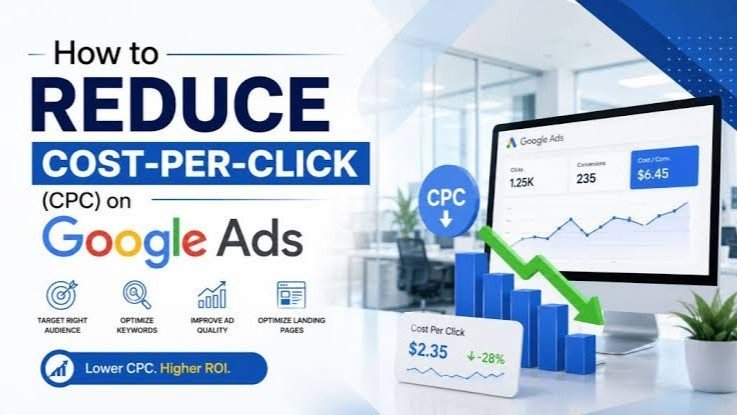
Google Ads is one of the most effective digital advertising platforms for driving targeted traffic, generating leads, and increasing sales. But rising competition across industries can make advertising expensive — and a high Cost Per Click can quietly eat your entire marketing budget without you noticing.
The good news: with the right optimisation strategies, businesses can lower their CPC while maintaining or even improving campaign performance. Here are the proven techniques that actually move the needle.
What Is Cost-Per-Click (CPC)?
Cost-Per-Click is the amount you pay each time someone clicks on your Google ad. It's one of the most important metrics in paid advertising because it directly affects your campaign budget and profitability.
Lowering CPC allows businesses to generate more traffic and conversions without increasing advertising costs.
Why CPC Matters
A lower CPC can help businesses increase website traffic within the same budget, improve return on ad spend (ROAS), generate more leads and sales, reach a larger audience, and scale campaigns more efficiently.
Reducing CPC isn't about getting cheaper clicks alone — it's about attracting higher-quality clicks at a lower cost.
1. Improve Your Quality Score
Quality Score is one of the most important factors affecting CPC in Google Ads. Google rewards advertisers who provide relevant and useful experiences to users. It's based on Expected Click-Through Rate (CTR), Ad Relevance, and Landing Page Experience.
How to improve it: use highly relevant keywords, write compelling ad copy, match ad content with landing pages, and improve website speed and user experience. The higher your Quality Score, the less you may need to pay for each click.
2. Use Long-Tail Keywords
Highly competitive keywords often have higher CPCs. Long-tail keywords are more specific search phrases that usually face less competition and cost less per click.
Instead of targeting "running shoes", target "affordable running shoes for beginners" or "best running shoes for flat feet". Long-tail keywords bring lower CPC, higher conversion rates, less competition, and more qualified traffic — because they attract users with stronger purchase intent.
3. Add Negative Keywords
Negative keywords prevent your ads from showing for irrelevant searches that waste your budget. If you sell premium software, for example, you might exclude terms like free, cheap, download, or trial.
This eliminates low-quality clicks and improves overall campaign efficiency — reduced wasted spend, better click quality, higher CTR, and improved Quality Score. Regularly reviewing search term reports can uncover valuable negative keyword opportunities.
Review your search terms report weekly for the first month of a new campaign — this is where most wasted spend hides, and it's the fastest lever to pull before touching bids.
4. Increase Ad Relevance
Google favours ads that closely match user search intent. More relevant ads often achieve higher click-through rates and lower CPCs. To improve relevance: include target keywords in headlines, address user needs directly, use clear calls to action, and create separate ads for different keyword groups.
5. Optimise Landing Pages
Many advertisers focus only on keywords and ad copy while overlooking landing page quality. Google evaluates page relevance, mobile-friendliness, loading speed, user experience, and content quality — a poor landing page can negatively impact Quality Score and increase CPC.
Landing page best practices: ensure fast loading times, match landing page content with ad messaging, use clear calls-to-action, make pages mobile-friendly, and provide valuable information. A strong landing page improves both CPC and conversion rates.
Reducing Cost Per Click in Google Ads isn't simply about lowering bids — it's about improving overall campaign quality and relevance. Businesses that focus on Quality Score, keyword optimisation, ad relevance, landing page experience, and audience targeting often achieve lower CPCs while generating better results.