
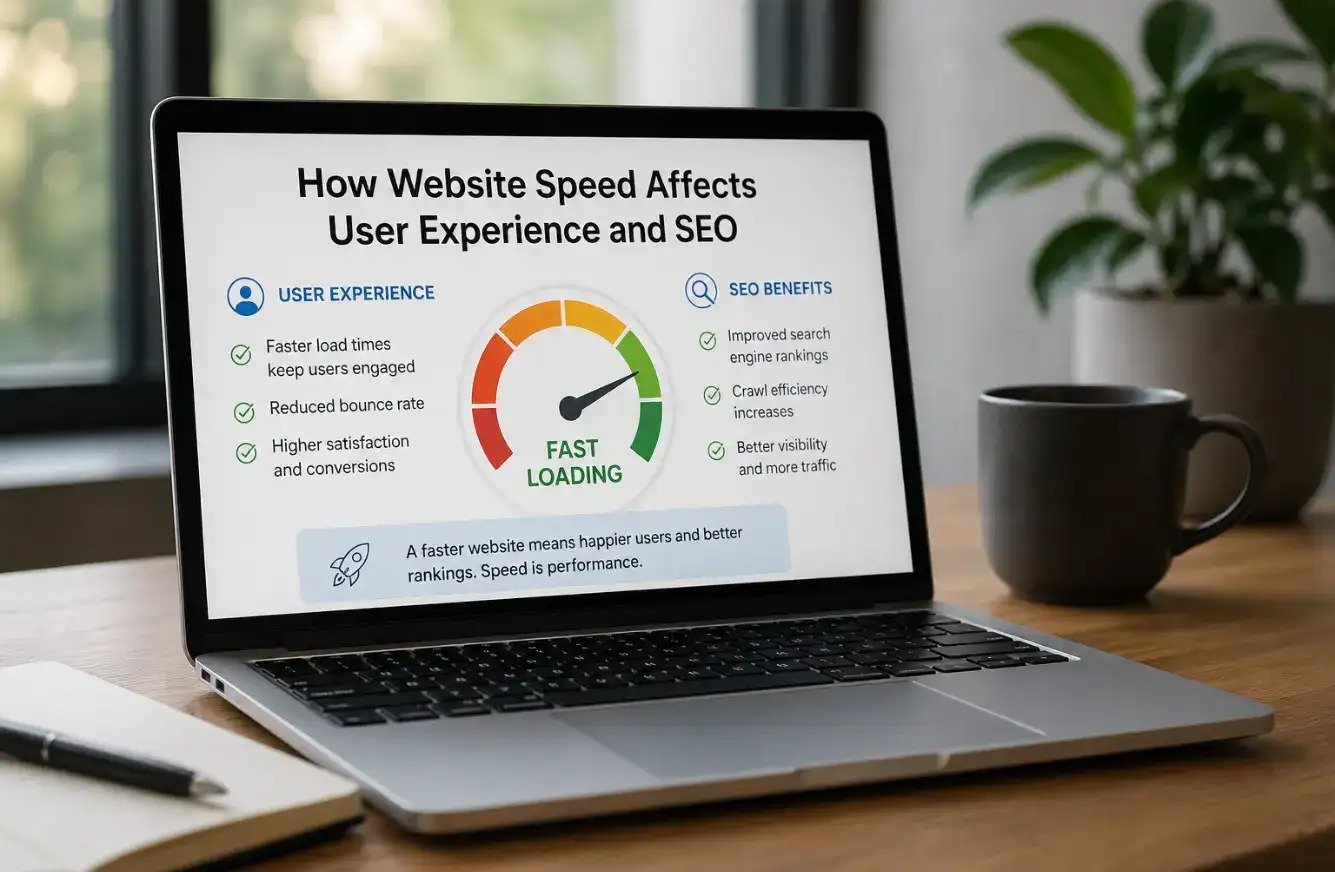
In today's digital world, website speed is more than just a technical feature — it's a key factor that influences your search engine rankings, user experience, and overall business success. A slow-loading website can frustrate visitors, increase bounce rates, and reduce conversions, while a fast website keeps users engaged and helps your business perform better online.
Why Website Speed Matters for SEO
Search engines like Google prioritise websites that provide a great user experience. Since page speed is a ranking factor, faster websites have a better chance of appearing higher in search results. Speed alone won't guarantee the top position, but it significantly contributes to your website's overall SEO performance.
A fast-loading website also helps search engines crawl and index your pages more efficiently, making it easier for your content to be discovered by potential customers in the first place.
Google can't rank a page it's still waiting to load. Speed isn't a nice-to-have — it's the entry ticket to ranking at all.
How Website Speed Impacts User Experience
Visitors expect a website to load within a few seconds. If your pages take too long, users are more likely to leave before exploring your products or services. A slow website can negatively impact:
- User satisfaction
- Bounce rate
- Average session duration
- Page views
- Customer trust
- Conversion rates
On the other hand, a fast website creates a smooth browsing experience, encouraging users to stay longer and interact with your content rather than bouncing straight back to the search results.
Tips to Improve Website Speed
You don't need to rebuild your website from scratch to make it faster. Start with these best practices:
- Compress and optimise images
- Enable browser caching
- Minify CSS, JavaScript, and HTML files
- Choose reliable web hosting
- Reduce unnecessary plugins and scripts
- Use a Content Delivery Network (CDN)
- Enable lazy loading for images and videos
- Regularly monitor your site's performance using speed testing tools
Start with image compression — it's usually the single biggest speed gain for the least amount of work, especially on content-heavy or e-commerce pages with lots of product photos.
Conclusion
Website speed is essential for both SEO and user experience. A faster website not only helps improve search engine rankings but also keeps visitors engaged, builds trust, and increases conversions. Investing in website performance is one of the most effective ways to strengthen your digital presence and achieve long-term business growth.