
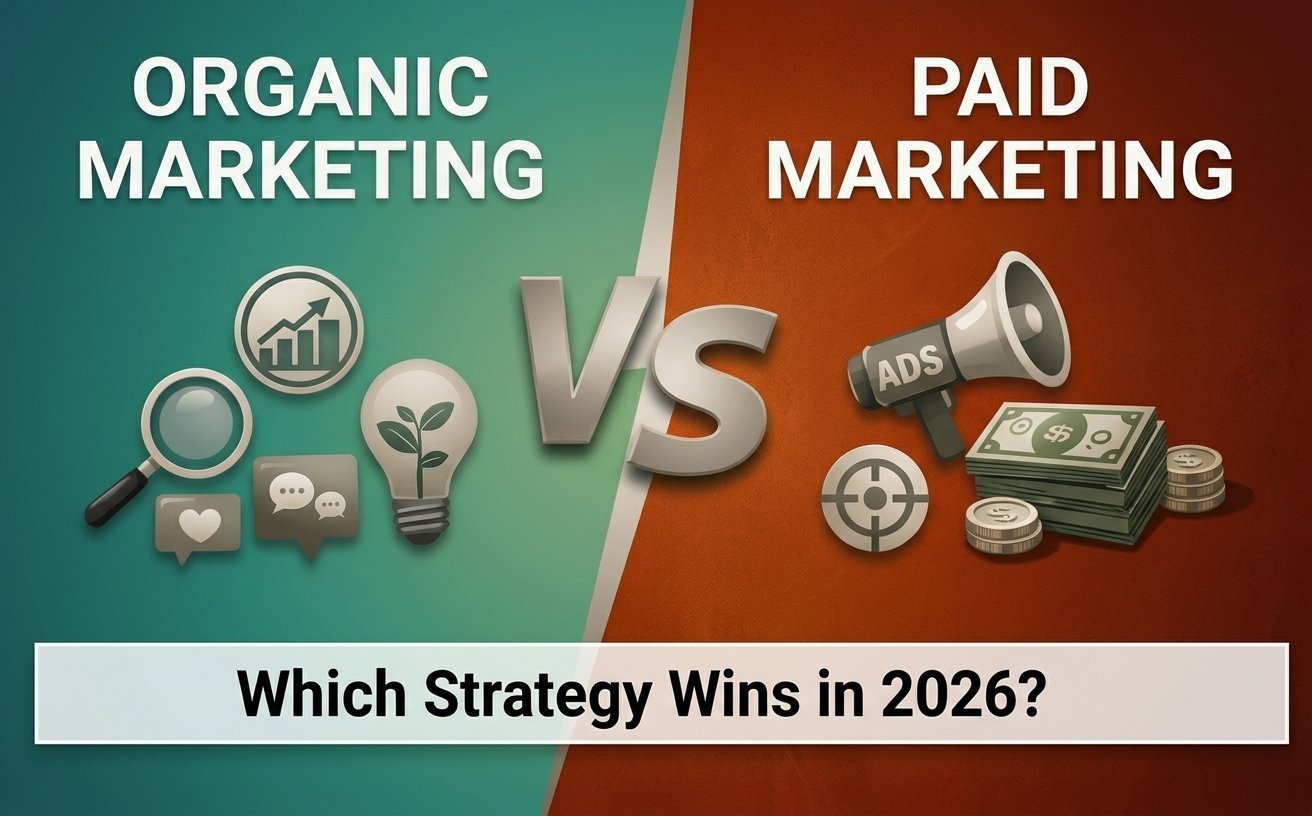
Every business wants the same thing: more customers without wasting money on marketing. But when it comes to choosing between organic and paid marketing, businesses often ask the wrong question — "which one is better?" The better question is: which one is right for your business, your goals, and your stage of growth?
In 2026, organic and paid marketing aren't really competitors. The strongest strategies use organic content to build trust and paid campaigns to accelerate reach and conversions. Let's break down the difference.
What Is Organic Marketing?
Organic marketing refers to attracting customers without directly paying for every impression or click. Common examples include SEO and blog content, social media posts, YouTube content, email marketing, community engagement, organic search traffic, and educational content. Its biggest advantage: good organic content keeps generating visibility long after it's published.
Benefits of Organic
- Builds trust and authority over time
- Long-term results from SEO and evergreen content
- Lower ongoing distribution cost per visitor
- Strengthens brand familiarity
The Downsides
- Usually takes time to build momentum
- Rankings and audiences don't happen overnight
- Needs consistent content and optimisation
What Is Paid Marketing?
Paid marketing involves investing money to reach a specific audience through advertising platforms — Meta Ads, Google Ads, YouTube Ads, LinkedIn Ads, TikTok Ads, display advertising, and retargeting campaigns. Instead of waiting for your audience to discover you organically, paid advertising puts your offer in front of targeted users much faster.
Benefits of Paid
- Faster reach as soon as campaigns launch
- Precise targeting by audience and behaviour
- Scalable by increasing investment
- Measurable performance down to the click
The Downsides
- Requires continuous investment to keep results
- Traffic generally stops when spend stops
- Weak creative or targeting can waste budget fast
Organic marketing builds the foundation. Paid marketing accelerates the growth. Neither replaces the other.
Organic vs Paid Marketing: What's the Difference?
| Factor | Organic | Paid |
|---|---|---|
| Cost | Lower direct distribution cost | Requires ad budget |
| Speed | Usually slower | Usually faster |
| Trust | Strong for long-term brand building | Depends on creative and offer |
| Scalability | Gradual | Can scale quickly |
| Results | Long-term potential | Immediate/short-term potential |
| Best for | Authority & brand growth | Leads, sales & fast reach |
| Sustainability | Can compound over time | Requires ongoing budget |
So, Which One Wins in 2026?
There isn't one universal winner. For most businesses, the smartest strategy is a combination of both. A business might use SEO and social content to establish authority while simultaneously running paid campaigns to generate leads. Someone who discovers your brand through an ad may then visit your social profile or website before buying — if your organic presence is strong, that paid click has a much better chance of converting.
Check whether people clicking your ads are also finding you organically elsewhere first. If your paid conversion rate is low, the gap is often a weak organic presence, not a bad ad.
When Should You Focus on Organic Marketing?
Organic marketing may be your priority if you're building a new brand, want long-term visibility, operate in a trust-heavy industry, have expertise you can turn into content, want to build an audience, are investing in SEO, or have a limited advertising budget.
When Should You Use Paid Marketing?
Paid advertising may be particularly useful if you need leads quickly, are launching a product, have a proven offer, want to reach a specific audience, are promoting a limited-time campaign, want to test audiences and messages, or are ready to scale a campaign that's already performing.
The Best Strategy: Combine Organic + Paid
Instead of choosing one, build a marketing ecosystem where both support each other:
- Create valuable organic content
- Identify which content performs best
- Turn your strongest ideas into paid campaigns
- Retarget people who interacted with your content
- Send traffic to a conversion-focused landing page
- Analyse results and optimise
This approach lets organic content provide trust and insights, while paid advertising provides reach and speed.
Conclusion
So, organic vs paid marketing — which actually wins in 2026? The answer is simple: the businesses that know how to use both strategically. Organic marketing helps you build authority, trust, and long-term visibility. Paid marketing helps you reach targeted audiences faster and generate measurable opportunities. You don't need to choose between them — you need the right balance for your business. The real winner isn't the business spending the most on ads or posting the most content. It's the business with the smartest strategy.